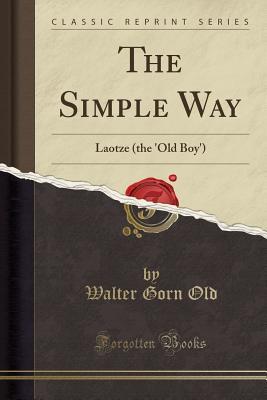
Lao Tzu was born in the early seventh century B.C. Although Taoism began before that, he put his knowledge together in the ‘Chinese Bible’, the Tao Te Ching. Thus began the rise and spread of Taoism.
It should be understood that as a religious text, the message is full of symbolism that can only be grasped with our intuition. The author is describing experiences beyond science and our senses. The common man of this age will laugh at this message – but take heed!
When a superior man hears of the Tao,
he immediately begins to embody it.When an average man hears of the Tao,
he half believes it, half doubts it.When a foolish man hears of the Tao,
he laughs out loud.If he didn’t laugh,
it wouldn’t be the Tao.
Out of the many translations of the Tao Te Ching, I prefer this one by Walter Gorn Old. The most essential ingredient to translating ancient texts is to have a degree of understanding of the topic at hand. His comments are apt and thought-provoking.
It is said, a reader can only understand such texts unless he or she has read them seven times. So get to it! Read it slowly, backwards and forwards, then set it aside and ponder it.